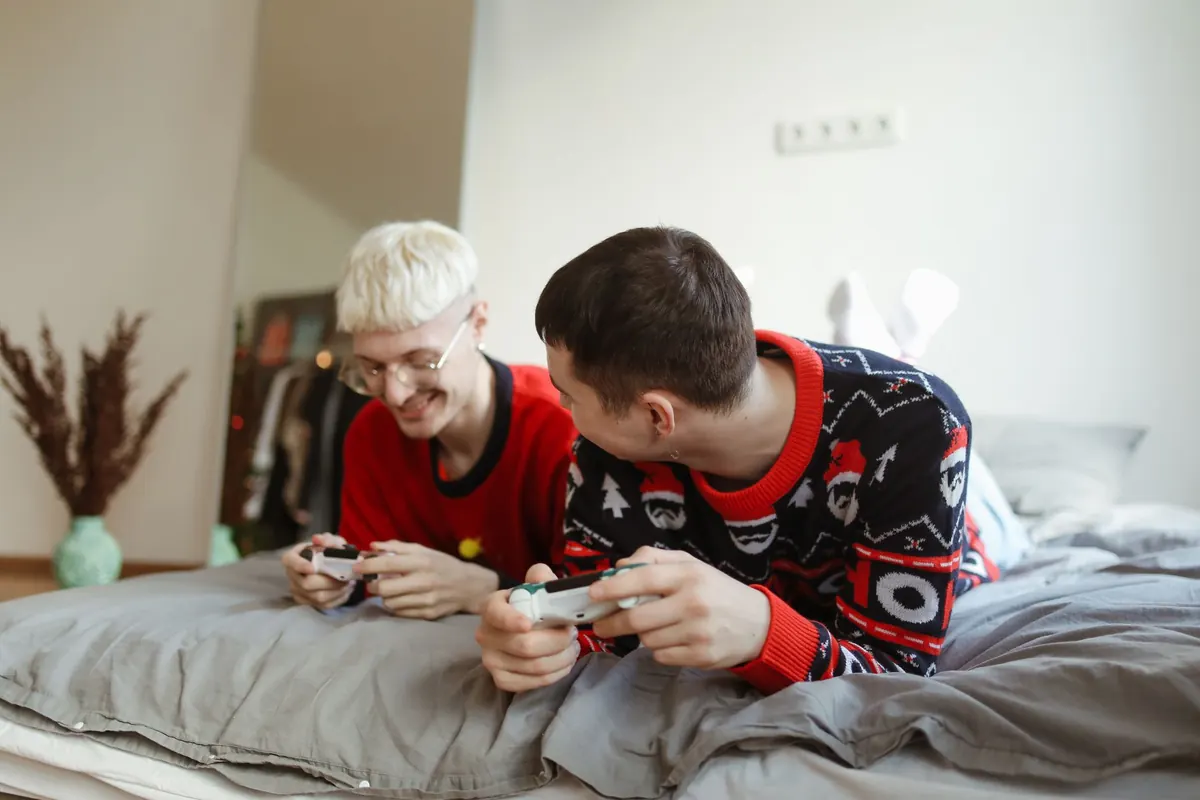
There is a specific kind of evening that only exists in late December. Someone is still picking at a plate of panettone, the heating is on too high, and nobody wants to start a film because half the room will fall asleep before the second act. That is prime gaming time, and it goes wrong more often than it should — usually because someone loads up a game built for a different room than the one they are sitting in.
The fix is not buying more games. It is matching three things before you press start: how many people are actually playing, how much energy the room has, and how long everyone is genuinely willing to sit still. Get those right and a five-year-old title will do more for the evening than anything released this month.
Match the Game to the Room, Not the Release Calendar
January sales and holiday discounts push the same big open-world releases at everyone, but most of them need forty hours and a quiet house. A holiday break gives you scattered pockets of time around family meals, travel, and odd sleeping schedules. Think in sessions instead of campaigns.
Ask three questions before you buy or install anything. Who is holding a controller — one person, two, or a rotating crowd? Is this a planned evening or a spare half hour before dinner? And is the room loud or quiet? A physics brawler with four people shouting is a wonderful thing at 11pm with friends and a disaster at 9am with grandparents in the next room. The same distinction decides the whole list below.
Cozy Picks for Slow, Quiet Evenings
Cozy games get described as low-stakes, which is only half true. The good ones are low-pressure but still ask something of you, which is why they hold attention past the first hour.
Stardew Valley remains the default for a reason: it can be played in single days, it supports co-op, and it never punishes you for disappearing for a week. Unpacking is the better choice if you want something to finish in two sittings — you place objects in rooms and the story arrives quietly through what people keep. A Short Hike takes an afternoon and leaves you in a better mood than most things that take sixty hours.
For something with more structure, Dave the Diver mixes diving runs with a sushi restaurant and keeps every session short. Lake is a postal round in a small town with no real failure state, and Wylde Flowers is a farming sim with a witchy plot and full voice acting, which matters if you are playing with someone who reads slowly. Dorfromantik is the one to keep installed for fifteen-minute gaps: place tiles, build a village, stop whenever.
One caveat worth knowing: Spiritfarer is beautiful and gentle in its mechanics, but it is explicitly about caring for spirits and saying goodbye to them. If the holidays are already emotionally loaded in your household, save it for February.
Quick cozy shortlist
- Twenty spare minutes: Dorfromantik, Unpacking, PowerWash Simulator
- A full quiet evening: Stardew Valley, Wylde Flowers, Dave the Diver
- Finish it and talk about it: A Short Hike, Lake
- Play with a partner: Stardew Valley co-op, Spiritfarer (see above)
Couch Co-op for Two to Four People
This is where most holiday plans succeed or collapse, because co-op games vary wildly in how they handle a group where one person is much better at games than everyone else.
It Takes Two is the standout, and it only works with exactly two players — there is no solo mode, which is worth knowing before you buy it for a party of five. Overcooked! 2 runs up to four locally and is genuinely funny for about twenty minutes, then genuinely tense. Set a limit before you start; it is a game about arguing, and some families do not need the prompt.
Snipperclips and Pico Park are the safer group picks: puzzle-shaped, easy to understand, and short enough that nobody sits out long. Human Fall Flat and Moving Out lean on slapstick physics rather than skill gaps, which levels the room nicely. If you have two people who want a proper campaign, Portal 2 still holds up and is cheap almost everywhere.
Party Games That Actually Carry a Room
A good party game needs one thing above all: a way for people who are not holding a controller to participate. That rules out a lot of splitscreen shooters and points towards games with short rounds and loud reactions.
- Jackbox Party Packs: everyone uses their own phone as a controller, the host needs a screen and an internet connection, and rounds run a few minutes. Quiplash and Fibbage are the reliable openers for mixed ages.
- Mario Kart 8 Deluxe: four players on one screen, and the assist options (auto-accelerate, smart steering) let a six-year-old finish races without being carried. Turn items to "frantic" once, for the story.
- Keep Talking and Nobody Explodes: one person defuses a bomb on screen, everyone else reads a printed manual and shouts instructions. The best possible use of a group that likes talking over each other.
- Ultimate Chicken Horse: players place traps in a level, then try to reach the goal. Rounds are under two minutes, which keeps a large group cycling through.
- Gang Beasts: physics brawling with no real technique required. Ideal for people who claim they hate video games.
- WarioWare: Move It! and Nintendo Switch Sports: motion controls, standing up, laughing at the failure states. Better in a living room with space than a bedroom.
- Among Us: needs a device per player and works best with five or more, so treat it as a planned session rather than a spontaneous one.
If the group skews towards people who never touch games, keep a tabletop fallback nearby — Codenames or Wavelength do the same social job with zero setup time.
Competitive Picks for the Grudge Match
Some winter evenings want a scoreboard. The trick with competitive games over the holidays is to set the format before anyone gets invested.
Rocket League is the easiest sell: free, matches under ten minutes, and immediately legible to anyone watching. Super Smash Bros. Ultimate is the local standard, and turning on the items and using a rotating "loser swaps out" rule keeps the whole room involved. For fighting game people, Tekken 8 and Street Fighter 6 both have modern control schemes that let a newcomer throw a decent punch within minutes.
Online competition is a different mood. Valorant, Counter-Strike 2, Apex Legends, and Splatoon 3 all ask for a commitment of thirty minutes or more and a headset, so they belong in the quiet hours rather than the middle of a gathering. If you are playing with friends who live elsewhere, agree a time window in advance — the biggest source of holiday friction is someone queueing for a ranked match while dinner is being served.
A Practical Setup Checklist Before Guests Arrive
Most of the frustration people blame on games is actually setup. Do this the day before.
- Install and update everything you plan to play. Downloads on the night itself will kill the mood faster than any bad game.
- Charge every controller and check you have enough of them — plus a cable long enough to reach the sofa.
- Test the accounts. Party packs and online games sometimes need a sign-in the first time, and guests should not be watching you reset a password.
- Write down the rules you will use (players per round, how the loser swaps out) so you are not negotiating mid-match.
- Keep two or three short games installed rather than one long one, so the room can change direction.
Finally, plan the breaks. Long sessions on a bright screen in a dark room cause eye strain and headaches, and it is easy to lose four hours without noticing. Stand up between rounds, get some water, and put a natural stopping point in the evening — a fixed number of races or a final round — so the fun ends while it is still fun. Skip the in-game stores while you are at it; nothing deflates a room like watching someone shop for skins between matches.
Photo: Polina Tankilevitch / Pexels